
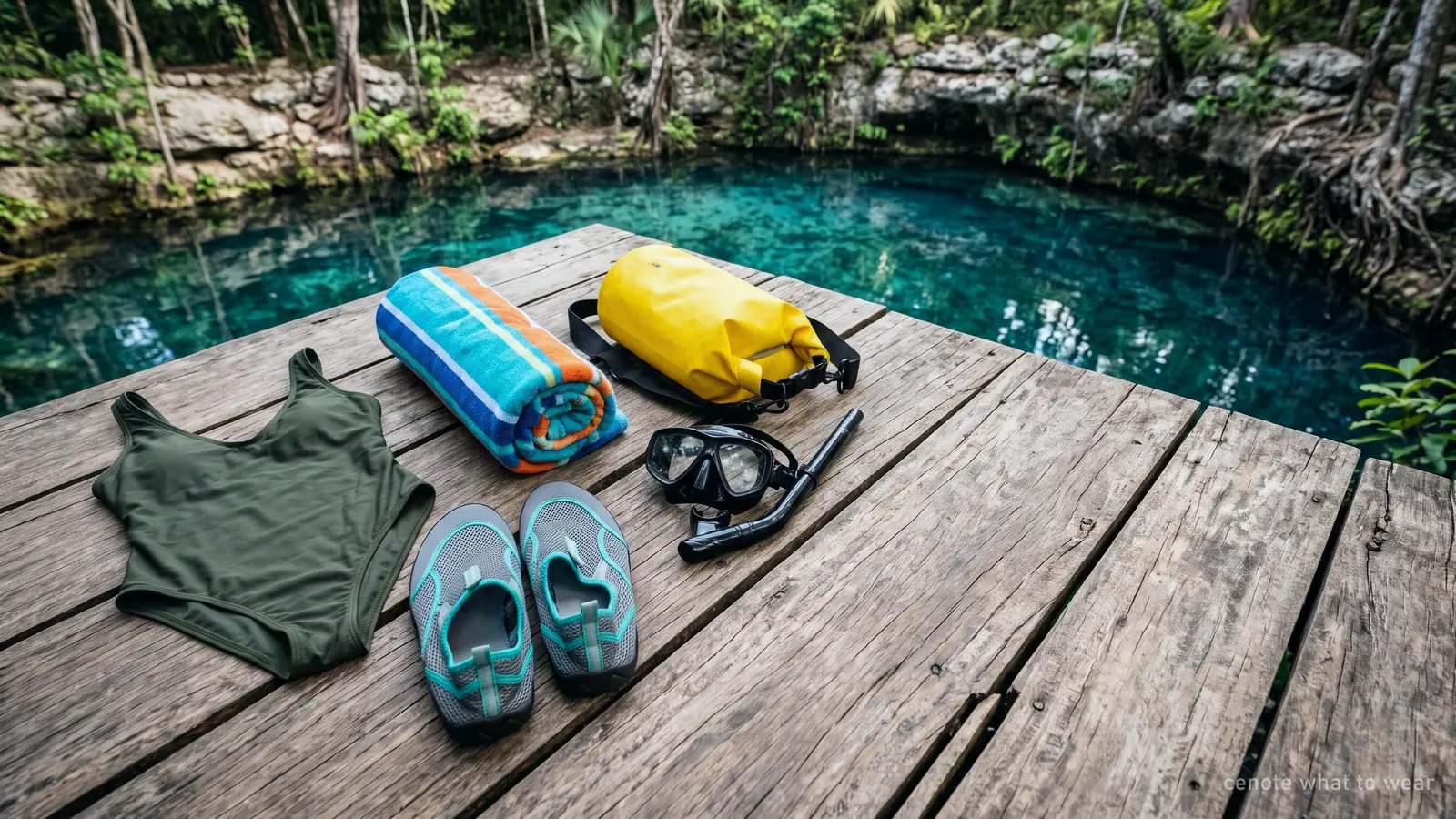
What should you wear and bring to a cenote?
Updated October 27, 2026
Quick answer
Wear swimwear and water shoes, and skip the sunscreen before you swim. Yucatán's cenote regulation bans lotions and other products for at least three hours before entering, except organic biodegradable ones at swimming cenotes, and asks you to shower first. Bring a towel, cash in pesos for the gate, life jacket and locker, and a dry bag for your phone.
The sunscreen rule is the one people get wrong. Sources disagree on how strict it is: the Yucatán decree allows organic biodegradable products at swimming cenotes, Por Esto (March 2026) says most cenotes ban ordinary sunscreen and repellent and allow only 100% biodegradable ones applied well in advance, and a Dos Ojos guide says to put on nothing before entering, not even eco-friendly products. The safe reading is to swim without it, rinse in the shower, and put sunscreen on after you get out. We found no Quintana Roo state law on sunscreen in cenotes, so each park sets its own rule.
Biodegradable sunscreen and the shower rule
Article 6 of Yucatán's Decree 193/2014 says visitors must not apply tanning lotions, soaps or any product that may harm the ecological balance within at least three hours before entering, except organic biodegradable products at swimming cenotes (section VII), and must shower before entering a swimming cenote, cave or grotto (section VIII). Yucatán Today explains why: everyday products such as sunscreen harm the aquifer. Rules by park:
- Yucatán cenotes (Ik Kil, Suytun, Zací) — The decree applies: biodegradable products only, at least three hours ahead, and a shower first.
- Dos Ojos, Tulum — No creams, sprays or protectors before entering, even eco-friendly ones; use them only after swimming (2024 guide).
- Most Quintana Roo cenotes — Ordinary sunscreen, repellent and body creams banned; 100% biodegradable only, applied well in advance; many require a shower (Por Esto, March 2026).
- Xcaret's Xenotes tour — Only sunscreen made with titanium oxide and zinc oxide is allowed, per Xcaret's FAQ.
- El Retoño swim day — The listing asks you to bring biodegradable sunscreen and biodegradable insect repellent.
Water shoes and clothes
Swimwear under your clothes saves time at the changing rooms. Water shoes help on the limestone: a Tulum guide (October 2026) recommends them for Calavera's slick steps, and the El Retoño swim day puts them on its what-to-bring list and does not allow open-toed shoes. Rio Secreto lends wet shoes and makes you lock away sandals that do not fasten at the ankle, along with hats, glasses, watches and jewellery. Ruins days need more: the Tulum and Chichén Itzá listings ask for comfortable shoes, and the Tulum listing for a passport or ID (a copy is accepted).
Cash for fees
Bring pesos in cash. Por Esto (March 2026) says not every cenote has a card terminal or a stable signal, and entry runs from 100 to more than 300 pesos (MXN). Then budget for the extras.
- Entry — Ik Kil 240 pesos with life vest, locker and parking; Gran Cenote about 500 pesos; Cenote Azul 120 to 180 pesos (2025 to 2026 reports). Every fee is on the cenote price page.
- Life jacket, snorkel, locker — At Gran Cenote, life jacket 50, snorkel 80 and locker 30 pesos (January 2025 report). At X'Kekén and Samulá, a mandatory life jacket costs 25 pesos (undated report).
- Tour extras — The Tulum ruins and Mariposa tour asks US$40 per adult in cash on the day for the site, Jaguar park and cenote fees; the ATV tour charges US$5 for a locker plus a US$5 refundable deposit.
Phone and dry bag
Some places ban phones in the water and some charge for cameras. The ATV, zipline and cenote tour does not allow cameras or phones during its activities, and Rio Secreto bans cameras in the cave; one reviewer found its own tour photos expensive. A 2023 visitor saw a 150-peso camera charge posted at Cenote Carwash, and an undated guide lists a US$15 GoPro fee at Calavera. Where phones are allowed, a dry bag or waterproof pouch keeps phone and cash dry between swims. Lockers are included at Ik Kil and on the turtle and cenote tour; on Xcaret's Xenotes tour there are none and bags stay in the van.
The kit list, and what a tour hands you
Swimwear, water shoes, towel, a change of clothes, cash in pesos, a reusable water bottle (plastic bottles are not allowed inside the Tulum site, per the Tulum listings), biodegradable sunscreen for after the swim, and a dry bag. On a tour some of this is covered: see what a cenote tour includes. The El Retoño swim day includes the life jacket and lunch, the turtle and cenote tour includes life jackets, lockers and two bottles of water, and Rio Secreto includes the wetsuit, helmet, lamp and towels.
Frequently asked questions
Can you wear sunscreen in a cenote?
Not ordinary sunscreen. Yucatán's decree allows only organic biodegradable products at swimming cenotes, applied at least three hours before entering; some parks, such as Dos Ojos, ask for none at all before the swim. Put it on after you get out.
Do you have to shower before a cenote?
In Yucatán, yes: the decree requires a shower before entering a swimming cenote, cave or grotto. Por Esto (March 2026) says many Quintana Roo cenotes require one too.
Do you need water shoes for cenotes?
They help. A Tulum guide recommends them for Calavera's slick steps, the El Retoño swim day lists them under what to bring, and Rio Secreto lends wet shoes for its cave.
Can you bring your phone into a cenote?
It depends on the place. The ATV tour and Rio Secreto ban cameras and phones during the activity; other cenotes allow them, and some post a camera charge. Use a dry bag or a locker.
How much cash should I bring to a cenote?
Enough for entry plus extras in pesos: 100 to more than 300 pesos for most entries (Por Esto, March 2026), about 500 at Gran Cenote, plus 30 to 80 pesos each for a life jacket, snorkel or locker where they are not included.
Sources