
commercial 8 min read
Cenote Diving near Cancún: Where, What It Costs, Who Can Go
Updated October 27, 2026
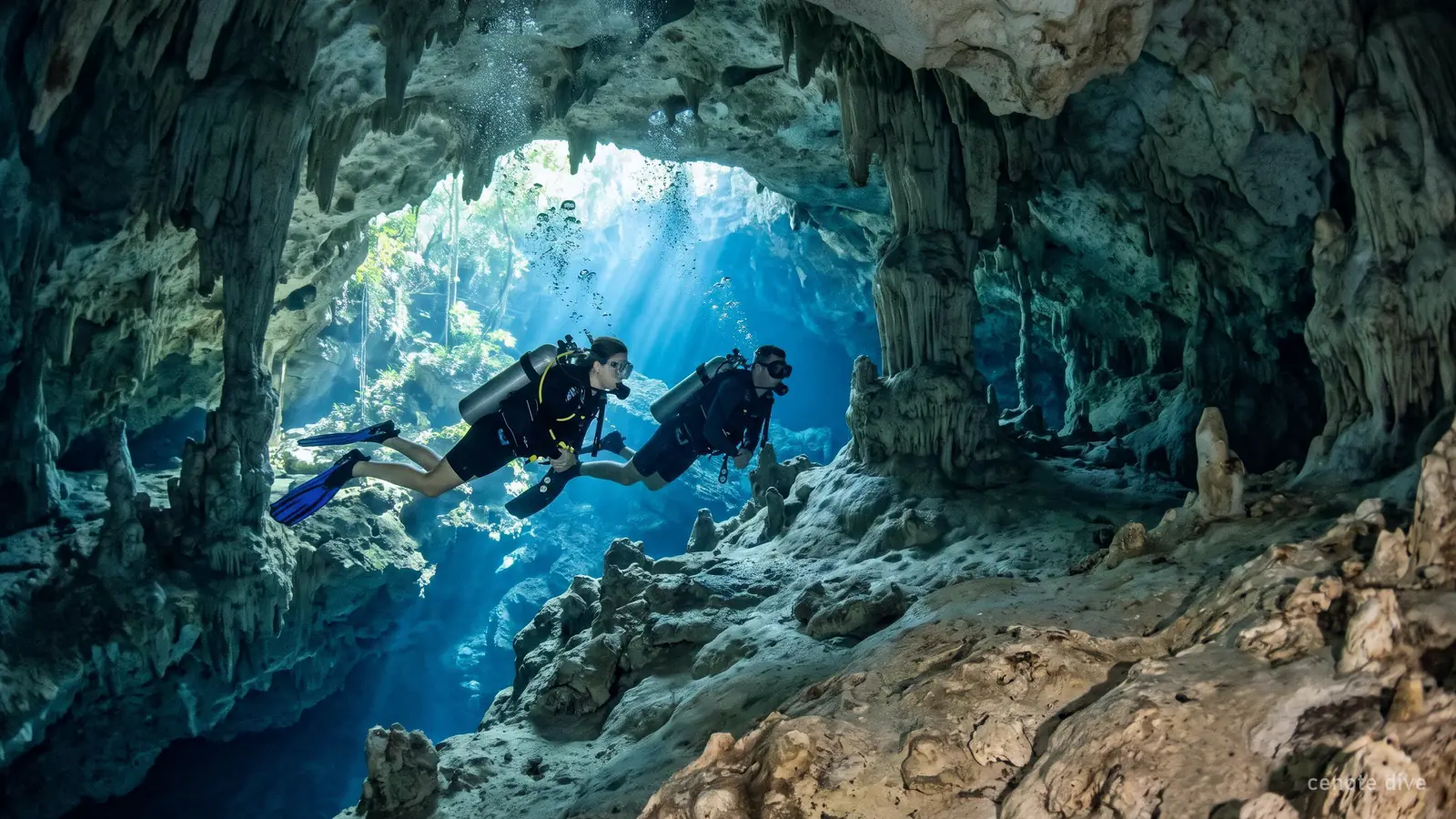
Cenote diving near Cancún means a guided cavern dive, usually two dives in a day in a flooded cave, staying where daylight still reaches, for divers who already hold a certification. The best-known sites are Dos Ojos and The Pit north of Tulum, Angelita south of Tulum, Chac Mool and Chikin Ha near Playa del Carmen, and Zapote on the Ruta de los Cenotes near Puerto Morelos. Dive centres charge about $160 to $215 for two dives on their own sites (€140 to €250 at one that prices in euros), and the pickup listings from Cancún cost $215. You need at least an Open Water card, and some dives and some centres ask for Advanced Open Water.
Cavern diving vs cave diving
The word “cenote dive” covers two very different things.
Cavern diving is recreational diving in the lit part of a cave, where you can see the exit by natural light. Wikipedia’s cave diving article says recreational agencies typically set limits of about 30 m (100 ft) depth and about 60 m (200 ft) of penetration. Every cenote dive sold to visitors in Cancún, Playa del Carmen and Tulum is a cavern dive with a guide.
Cave diving goes beyond the daylight. The same article calls it technical diving, with a continuous guideline, redundant lights and planned gas reserves. Training usually runs Cavern, then Intro to Cave, then Apprentice, then Full Cave. Only full cave divers go past the light zone. Our guide to cave diving in the cenotes covers that side.
| Cavern dive | Cave dive | |
|---|---|---|
| Where | Inside the light zone, exit visible | Beyond daylight |
| Typical limits | About 30 m deep, 60 m in (agency figures cited by Wikipedia) | Set by cave training level |
| Who can go | Certified open-water divers with a cavern guide | Divers with cave certification |
| Sold as a tour | Yes, by dive centres and on GetYourGuide | No; it is a course or a team dive |
The certification you need
There is no single rule. Each dive centre sets its own entry level for each cenote, and they differ.
- Scuba Tulum (its booking pages): Dos Ojos needs Open Water or higher, a dive within the past year and a minimum age of 15, with a maximum depth of 10 m (33 ft). Angelita needs Advanced Open Water. The Pit needs Advanced Open Water plus the Deep Diving specialty.
- Mexidivers (Tulum): Open Water minimum for its two Dos Ojos cavern dives, at about 5 to 10 m.
- Agua Clara Diving Tulum: Advanced Open Water for its Pit and Dos Ojos day, a dive within the last six months, deep and cavern experience for The Pit, and a minimum age of 16.
- Xico Dive Center (Playa del Carmen): the deeper routes need an Advanced Open Water card.
- Deep Dive Mexico (Playa del Carmen): a minimum age of 15, and 18 at Chac Mool.
If you want the cavern card itself, PADI’s own course page says the PADI Cavern Diver course requires Advanced Open Water Diver and a minimum age of 18. It teaches cavern diving within the light zone. You do not need that card to join a guided cavern tour.
The best cenotes to dive
These are the cenotes the dive centres above run trips to, with what each one is known for.
Dos Ojos (north of Tulum). Two cenotes that open into one large cavern. Scuba Tulum caps the dive at 10 m, and Agua Clara names two lines: the Barbie Line at about 6 m and the Bat Cave at about 10 m. It is the usual first cenote dive. See Cenote Dos Ojos.
The Pit (in the Dos Ojos park). A deep shaft where, per Scuba Tulum, sun rays reach about 30 m and meet a thin white hydrogen sulphide cloud. Wikipedia gives its full depth as 119.1 m (391 ft), the deepest known cave passage in Quintana Roo. Divers only.
Angelita (17 km south of Tulum). A deep cenote with a hydrogen sulphide layer at the halocline. Scuba Tulum takes divers to a maximum of 33 m (100 ft).
Zapote (Ruta de los Cenotes, about 36 km south of Cancún per Wikipedia). Home of the “Hells Bells”, bell-shaped rock formations at 29 to 35 m. The Quintana Roo tourism portal says they are for certified divers only. See Cenote Zapote.
Chac Mool and Chikin Ha (Playa del Carmen area). Deep Mexico gives Chikin Ha a maximum depth of 10 m (30 ft). Xico Dive Center sells both at its standard two-dive price.
Casa Cenote (Tankah, north of Tulum). An open mangrove cenote where, per one Tulum guide, diving depth is no more than 6 m (18 ft). Dive centres use it for first dives. See Casa Cenote.
What a cenote dive costs
Prices below are as published on each dive centre’s own site, in the currency it uses. Dollar figures for peso prices use 18.5913 pesos to the dollar (27 October 2026). The cenote’s own entrance fee is paid in pesos, sometimes in cash on the day.
| Dive centre or listing | Base | Two-dive price | Cenote fee |
|---|---|---|---|
| La Calypso Dive Center (lacalypsodivecenter.com) | Tulum | 160 USD at Dos Ojos; 220 USD for three dives, Pit + Dos Ojos | Included |
| Mexidivers (mexidivers.com) | Tulum | MX$3,000 (about $161) at Dos Ojos | 400 pesos extra, cash |
| Agua Clara Diving Tulum (aguaclaradivingtulum.com) | Tulum | MX$3,000 (about $161); three dives MX$4,500 | 900 pesos extra, cash |
| Deep Mexico (deepmexico.com) | Playa del Carmen | MX$3,400 (about $183) at Chikin Ha | Included |
| Xico Dive Center (xicodivecenter.com) | Playa del Carmen | MX$3,800 (about $204) at Chac Mool, Dos Ojos or Chikin-Ha; MX$4,000 (about $215) El Pit pairs | Included |
| Deep Dive Mexico (deepdivemexico.com) | Playa del Carmen | €140 at Chac Mool; €180 at Dos Ojos or Chikin Ha; €175 to €250 advanced pairs | Gear €5 per item |
| GetYourGuide listing: two dives at Dos Ojos | Pickup in Cancún and Riviera Maya | $215 | Included |
| GetYourGuide listing: two dives at Ki Ha and Zapote | Pickup in Cancún and Riviera Maya | $215 | Not stated |
La Calypso’s rate page carries a 2011 to 2024 copyright, so its prices may be older than the others. Mexidivers says its groups are at most four divers per guide, and Xico and Deep Dive Mexico say the same.
The two GetYourGuide dive listings are run by Scuba & Adventours, are marked as new and had no reviews when we checked. Both list hotel pickup in Cancún and the Riviera Maya, all scuba gear and a lamp, lunch, free cancellation up to 24 hours before, and reserve now, pay later. The Dos Ojos listing says its guide is a full cave diver. The Zapote listing’s summary asks for Advanced Open Water, or Open Water with at least 20 logged dives.
Looking for a cenote dive without a dive card? The cenote tours from Cancún on our tours page are swim and snorkel days, and none needs a certification. If you have never dived, two centres sell a first scuba session in a cenote: La Calypso lists Discover Scuba at Casa Cenote for 140 USD, and Tulum Underground lists a cenote scuba lesson at $179.
Is cenote diving safe?
We can only say what the sources say. Wikipedia’s cave diving article records Sheck Exley’s five rules from 1979: training, a continuous guideline to the exit, depth limits, gas management by thirds, and at least three lights. It says failing to use a guideline is the most frequent cause of death among untrained divers. It adds that in early cave diving about 90% of accidents involved untrained divers, and that no reliable worldwide fatality database exists. We found no count of cave diving deaths specific to the Mexican cenotes.
Two practical points come from Wikipedia’s cenote article: fresh water changes your buoyancy, so you need different weighting than in the sea, and the halocline, where fresh water meets salt water, blurs your vision. For general swim safety, see are cenotes dangerous.
Freediving in the cenotes
Freediving is diving on one breath. SSI, a training agency, lists Angelita among the best cenotes for it: about 60 m (197 ft) deep, advanced only, with the halocline at about 30 m. SSI says training is essential because of the overhead environment and the changing depths. It gives Dos Ojos visibility of up to 100 m.
Snorkelling and other ways to see a cave
If you are not certified, you can still see a cavern from the surface. The cenote swim and snorkel guide covers the rules. Rio Secreto, south of Playa del Carmen, runs a guided walk and swim through an underground river with a wetsuit, helmet and lamp, from $119 on GetYourGuide (4.6 on 201 reviews of this tour on GetYourGuide). See the underground river and cave tour.
Frequently asked questions
Is cenote diving the same as cave diving?
No. A guided cenote dive for holiday divers is a cavern dive: you stay in the part of the cave where daylight still shows the way out. Cave diving goes beyond daylight and needs full cave training.
What certification do I need to dive a cenote?
It depends on the dive and the centre. Scuba Tulum takes Open Water divers at Dos Ojos but asks for Advanced Open Water at Angelita and The Pit. Agua Clara Diving asks for Advanced Open Water even for its Pit and Dos Ojos day.
How much does a cenote dive cost?
Two guided cavern dives cost about $160 to $215 on dive centres' own sites that price in dollars or pesos (€140 to €250 at Deep Dive Mexico), depending on the cenote and on whether transport and the cenote fee are included. Two dive listings from Cancún on GetYourGuide cost $215 with hotel pickup.
Can I dive a cenote without a certification?
Not on a cavern dive. Some centres offer a first scuba session in a shallow cenote instead: La Calypso Dive Center lists Discover Scuba at Casa Cenote for 140 USD, and Tulum Underground lists a cenote scuba lesson at $179.
Is cenote diving safe?
Wikipedia's cave diving article says most cave diving deaths come from running out of gas, often after getting lost, and that in early cave diving about 90% of accidents involved untrained divers. Guided cavern dives stay in the light zone with a guide and a guideline.
Sources